


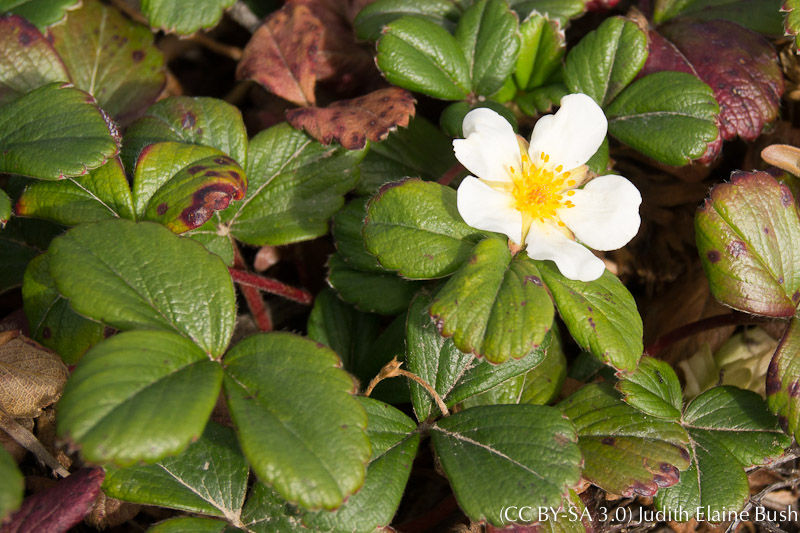

Beach Strawberry (Fragaria chiloensis) Beach Strawberry is a beautiful California native perennial groundcover known for its glossy green leaves, delicate white flowers, and small, red strawberries. Naturally found along coastal areas, this spreading plant forms a dense carpet of foliage that helps stabilize soil and cover open spaces in the garden. Blooming primarily in spring, its flowers attract native bees and other beneficial pollinators, while its fruit can provide food for wildlife. Beach Strawberry thrives in coastal gardens and can grow in full sun near the coast or partial shade in warmer inland locations. Once established, it can be a useful, low-growing addition to water-wise native landscapes.
Quick care: Full sun along the coast • Part shade inland • Low to moderate water • Well-drained soil • Glossy green foliage • White spring flowers and red fruit.
Plant Profile
Plant Type: Evergreen to semi-evergreen perennial groundcover
Mature Size: Approximately 4–8 inches tall, spreading 1–2 feet or more through runners
Native Range: Pacific coastal regions of California and other parts of the western Americas, including coastal areas of North and South America
Flower Color: White with yellow centers
Bloom Time: Spring through early summer
Foliage: Glossy green, typically divided into three toothed leaflets
Growth Habit: Low-growing, spreading plant that forms new growth from aboveground runners called stolons
Growing Conditions
Sun: Full sun in cool coastal climates; partial shade is beneficial in hotter inland gardens
Water: Low to moderate once established; occasional summer watering may be needed, especially inland
Soil: Well-drained sandy, loamy, or rocky soil; tolerates some variation in soil type when drainage is adequate
USDA Zones: Approximately 5–10, depending on local conditions
Drought Tolerant: Moderately drought tolerant once established, particularly in coastal settings
Maintenance: Low; trim runners to control spreading and remove old or damaged leaves as needed. Avoid excessive irrigation and waterlogged soil.
Planting Instructions
Best Planting Time: Fall through spring in California, when temperatures are mild and seasonal rainfall helps plants establish
Spacing: Plant approximately 12–18 inches apart for groundcover, allowing room for runners to fill in
Planting Depth: Dig a hole as deep as the root ball and about twice as wide. Set the plant at the same depth it was growing in its nursery container, keeping the crown at soil level
Establishment Water: Water thoroughly after planting. Water regularly during establishment, allowing the soil to drain between waterings
Long-Term Care: Gradually reduce watering as the plant establishes. Provide occasional deep watering during extended dry periods, especially in inland gardens. Trim runners if needed to maintain boundaries, and avoid planting in areas where water tends to collect.
Wildlife & Pollinators
Attracts: Native bees, butterflies, and other flower-visiting insects
Pollinator Value: Its white flowers provide pollen and nectar for visiting pollinators
Wildlife Benefits: Red fruits may be eaten by birds and other wildlife, while its dense foliage offers low-growing habitat cover
Deer Resistant: Not reliably deer resistant; browsing may occur
Garden Benefits: Excellent for coastal gardens, slopes, erosion control, pathway edges, and low-growing native groundcover
Notable: Beach Strawberry is an important coastal groundcover that spreads naturally to form a lush, low-growing mat. It is useful for stabilizing soil and filling spaces between larger native plants. Unlike selected cultivars, plants grown from seed or sourced as straight species may vary in fruiting, growth habit, and appearance.