


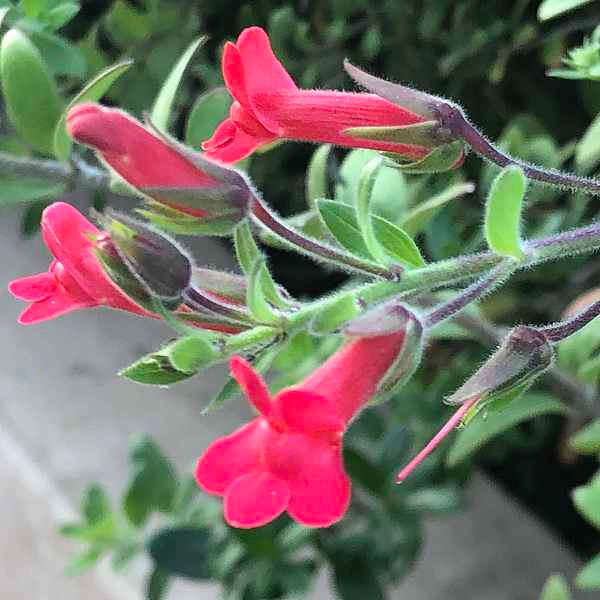

Firecracker Island Snapdragon (Galvezia speciosa ‘Firecracker’) is a vibrant California native evergreen shrub known for its bright red, tubular flowers and compact, bushy growth habit. Its small, softly textured green leaves provide an attractive backdrop for abundant blooms that appear most heavily in spring and continue intermittently through summer and fall, sometimes nearly year-round in mild climates. This versatile shrub is especially popular with hummingbirds and is an excellent choice for coastal gardens, shaded areas beneath oak trees, slopes, and mixed native plantings. Drought tolerant once established, it adapts to a variety of soil types and tolerates coastal wind and salt spray, making it a colorful and low-water addition to California landscapes.
Quick care: Full sun to part shade • Low water once established • Well-drained soil • Bright red tubular flowers • Evergreen, compact shrub.
Plant Profile
Plant Type: Evergreen perennial shrub
Mature Size: Approximately 2–3 feet tall and 3–6 feet wide, depending on growing conditions
Native Range: Selected cultivar of a species native to California's Channel Islands and Guadalupe Island, Mexico
Flower Color: Bright scarlet to deep red
Bloom Time: Spring through fall, with occasional flowers throughout the year in mild climates
Foliage: Small, green to gray-green leaves with a slightly soft or fuzzy texture
Growth Habit: Compact, dense, rounded shrub with arching branches and flowers clustered near branch tips
Growing Conditions
Sun: Full sun to part shade; afternoon shade is beneficial in hot inland gardens
Water: Low once established; occasional deep watering encourages fuller growth, especially inland
Soil: Adaptable to sandy, rocky, loamy, and clay soils, provided drainage is adequate
USDA Zones: Approximately 9–11; protect from hard freezes
Drought Tolerant: Yes — once established
Maintenance: Low; pinch or lightly prune branch tips to encourage dense, bushy growth. Periodic pruning can help prevent excessive woodiness and maintain a compact shape.
Planting Instructions
Best Planting Time: Fall through spring in California, when temperatures are mild and seasonal rainfall supports establishment
Spacing: Plant approximately 3–5 feet apart, adjusting spacing based on the desired coverage and mature spread
Planting Depth: Dig a hole as deep as the root ball and about twice as wide. Set the plant at the same depth it was growing in its nursery container
Establishment Water: Water thoroughly after planting. Water regularly during establishment, allowing the soil to drain between waterings
Long-Term Care: Gradually reduce watering as the plant establishes. Once established, provide occasional deep watering during extended dry periods, particularly in hot inland areas. Prune lightly to maintain a dense form, and protect plants from hard freezes.
Wildlife & Pollinators
Attracts: Hummingbirds, butterflies, native bees, and other beneficial insects
Pollinator Value: Its bright red, tubular flowers provide nectar that is especially attractive to hummingbirds
Wildlife Benefits: Provides a valuable nectar source and contributes to habitat diversity in native gardens
Deer Resistant: Often considered deer resistant, although browsing may occur
Garden Benefits: Excellent for coastal gardens, slopes, borders, containers, dry shade beneath oaks, and low-water landscapes
Notable: ‘Firecracker’ was introduced by Tree of Life Nursery and is valued for its compact growth habit, slightly fuzzy foliage, and showy red flowers. Unlike the more sprawling form of the species, this selection stays relatively dense and produces flowers at the ends of its branches, making the blooms especially noticeable to visiting hummingbirds.